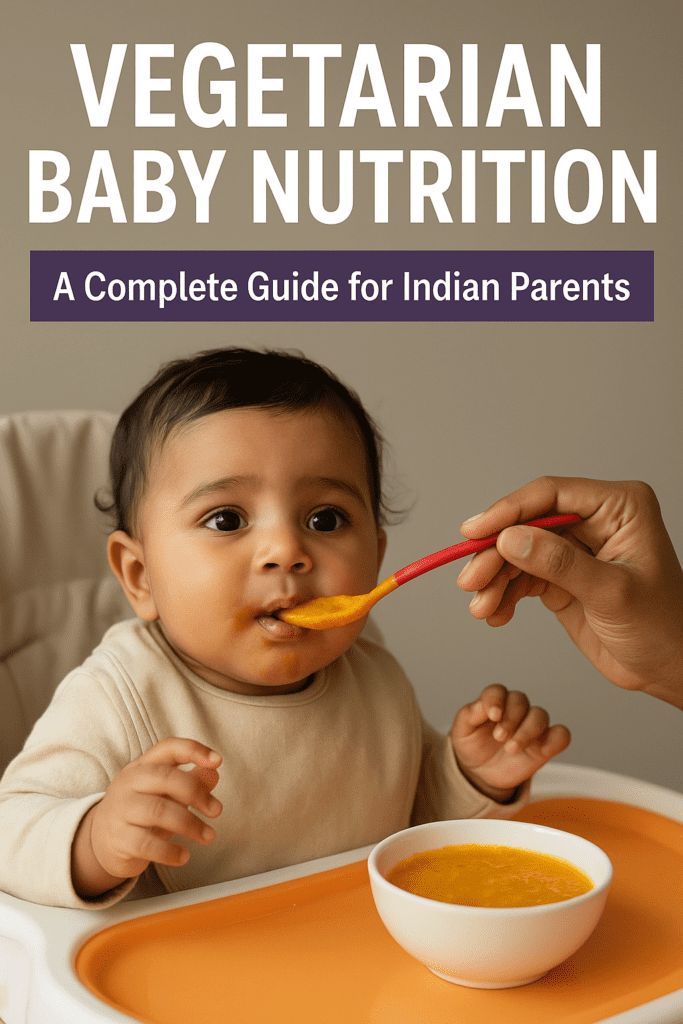
Raising a baby on a Vegetarian Indian diet is not only common in India but also completely healthy when planned correctly. With the right mix of nutrients, traditional Indian foods can support your baby’s growth, brain development, digestion, and immunity. Whether your family is lacto-vegetarian, ovo-vegetarian, or transitioning to plant-based foods, this guide will help you understand what your baby needs nutritionally at every stage.
This comprehensive guide covers nutrients to focus on, age-wise feeding recommendations, Indian meal ideas, safety tips, and commonly asked questions by Indian parents.
Why a Vegetarian Indian Diet Works Well for Indian Babies
India has a rich tradition of plant-based meals filled with grains, legumes, vegetables, fruits, spices, and dairy products. A well-balanced vegetarian diet can offer:
- Adequate protein from dal, paneer, tofu, curd, and legumes
- Healthy fats from ghee, nuts powders, and seeds
- Iron and zinc from dals, millets, spinach, and fortified cereals
- Vitamins from fruits, vegetables, and dairy
The key is variety, balance, and consistency. Babies can thrive on vegetarian foods when nutritional needs are met mindfully.
Essential Nutrients for Vegetarian Indian Diet for Babies
1. Protein
Protein supports muscle growth, bone development, and overall growth.
Vegetarian Indian sources:
- Dal (moong, masoor, toor)
- Paneer and curd
- Tofu
- Rajma, chole (in mashed form)
- Dalia + milk
- Sprouted moong paste
Include one protein-rich item in every meal.
2. Iron
Vegetarian iron (non-heme iron) is absorbed less efficiently, so pairing iron-rich foods with Vitamin C is important.
Iron-rich options:
- Ragi
- Spinach puree
- Masoor dal
- Moong dal
- Jaggery (sparingly)
- Fortified baby cereals
Vitamin C boosters: Orange, lemon, amla, tomatoes, sweet lime.
3. Calcium
Plant-based babies require strong calcium intake to support bones and teeth.
Good sources:
- Curd
- Paneer
- Milk (after 12 months)
- Ragi
- Sesame seeds powder (til)
- Almond powder
4. Healthy Fats
Fats fuel brain development and energy levels.
Healthy Indian fats:
- Ghee
- Homemade unsalted butter
- Coconut oil
- Almond powder
- Flaxseed powder
Add a few drops of ghee/oil in lunch and dinner for better nutrient absorption.
5. Vitamin B12
Vegetarian diets can be low in B12, but Indian dairy sources provide adequate levels.
B12 sources:
- Paneer
- Curd
- Milk (after 1 year)
- Fortified cereals
6. Omega-3 Fatty Acids
Key for brain development.
Veg sources:
- Flaxseed powder
- Chia seeds powder
- Walnut powder
Add tiny amounts to porridges after 8 months.
Age-Wise Vegetarian Indian Diet guide for Babies
0–6 Months: Exclusive Breastfeeding
Breast milk provides complete nutrition. If breastfeeding is not possible, formula is the safe alternative.
No water, juices, or solids.
6–8 Months: First Foods (Introductory Stage)
Start with soft, easily digestible purees and porridges.
Recommended vegetarian Indian Diet foods:
- Moong dal water → dal puree
- Rice cereal / rice porridge
- Ragi porridge
- Mashed vegetables (carrot, pumpkin, sweet potato)
- Mashed fruits (banana, chikoo, apple puree, pear)
- Suji kheer (without sugar)
- Curd (2–3 spoons daily)
Introduce one new food every 3 days to check for allergies.
8–10 Months: Textures and Variety
Now the digestive system is stronger.
Add:
- Khichdi (dal + rice + ghee + vegetable)
- Ragi dosa pieces soaked in dal
- Idli with ghee
- Upma
- Thick dal + soft rotis mashed
- Paneer scramble
- Dalia porridge
- Mixed vegetable mash
Finger foods:
- Steamed carrot sticks
- Soft fruit slices
- Small pieces of dosa/idli
10–12 Months: Family Food (Modified)
Kids can eat most vegetarian family foods with less spice and salt.
Include:
- Dal rice
- Soft chapati pieces with ghee
- Vegetable poha
- Stuffed paratha mashed (paneer, aloo, dal)
- Ragi halwa
- Vegetable khichdi
- Curd rice
Avoid honey, cow’s milk as main drink, whole nuts, popcorn, and fried foods.
12 Months Onwards: Balanced Daily Diet for a Vegetarian Toddler
A good daily routine:
- Milk: 300–400 ml
- Fruits: 1–2 servings
- Vegetables: 2 servings
- Dal/legumes: 1–2 servings
- Cereals: 2–3 servings
- Healthy fats: 1–2 teaspoons
- Paneer/curd: daily
- Dry fruit powder: ½ tsp
Encourage family meals and self-feeding.
Also refer to Baby Food Chart that can be useful
Sample 1-Day Vegetarian Meal Plan for Indian Babies (10–12 Months)
Breakfast:
Ragi porridge with ghee + banana mash
Mid-Morning:
Curd + fruit puree
Lunch:
Moong dal khichdi with vegetables + paneer cubes
Snack:
Steamed sweet potato sticks
Dinner:
Dalia upma or soft chapati mashed with dal + ghee
Bedtime:
Breast milk or formula
This ensures balanced protein, iron, calcium, vitamins, and fats.
Safety Tips for Vegetarian Baby Feeding
- Avoid sugar, honey, salt, and cow’s milk before 1 year.
- Introduce allergens carefully: wheat, dairy, nuts (as powder), soy.
- Avoid whole nuts—risk of choking.
- Ensure foods are soft, mashed, or steamed.
- Use ghee or oil to aid digestion and absorption.
- Do not replace breast milk/formula with plant milks (almond/soy) before 1 year.
- Ensure variety—avoid repeating the same meal daily.
Common Questions Indian Parents Ask
1. Is a vegetarian diet enough for proper growth?
Yes. With dal, dairy, grains, fruits, vegetables, and nuts, a vegetarian diet is nutritionally complete.
2. What about protein deficiency?
Including dal, paneer, curd, tofu, and legumes daily ensures adequate protein intake.
3. Can a vegetarian baby lack iron?
Pair iron-rich foods with Vitamin C to improve absorption. Ragi and dals provide excellent iron.
4. When can I give cow’s milk?
After 12 months, and not more than 400 ml per day.
5. Should I use supplements?
If your pediatrician recommends Vitamin D, Omega-3, or iron supplements, follow guidance.
Conclusion
A vegetarian Indian diet for Babies is not only safe for Indian babies but can be incredibly nutritious when thoughtfully planned. With the abundance of dals, grains, vegetables, millets, fruits, dairy, and traditional recipes available, parents can easily support their baby’s growth, immunity, and brain development.
Focus on balanced meals, nutrient-rich ingredients, age-appropriate textures, and consistent feeding routines. Every baby is different, so watch their cues, track their growth, and adjust meals gradually.
With the right approach, your baby will thrive—healthy, strong, and well-nourished—on a wholesome Indian vegetarian diet.