
Watching a baby grow is one of the most exciting parts of parenting. Every new milestone—whether it’s the first smile, first step, or first word—brings joy and reassurance. Among these milestones, tracking a baby’s weight is one of the most important indicators of healthy development. A baby health weight chart helps parents understand whether their child is growing at a healthy rate compared to global standards. While every baby is unique and grows at their own pace, these charts, based on WHO (World Health Organization) growth standards, offer a useful reference for healthy growth patterns.
This guide explains what baby health weight charts are, why they matter, how to read them, and what factors affect baby weight. It also includes standard weight charts for both boys and girls from birth to 24 months.
Why Baby Weight Matters
A baby’s weight provides meaningful clues about their overall health. Consistent weight gain usually indicates:
- Good nutrition
- Proper feeding habits
- Normal metabolic function
- Adequate absorption of nutrients
On the other hand, poor weight gain over time may signal feeding issues, underlying health problems, or developmental concerns that need attention. Weight measurements taken regularly allow parents and doctors to identify problems early.
What Is a Baby Health Weight Chart?
A baby health weight chart is a standardized chart used to compare a baby’s weight with that of other children of the same age and sex. The World Health Organization created these charts using data from thousands of children around the world who were raised under ideal health and nutrition conditions.
Growth charts are typically expressed in percentiles such as the 5th, 10th, 50th, and 90th percentiles. The 50th percentile is the average. Being above or below a percentile does not automatically indicate a problem—what matters most is the baby’s growth pattern over time, not the exact number.
Baby Weight Chart for Boys (0–24 Months)
(Approximate WHO standards)
| Age | 5th %ile | 50th %ile (Average) | 95th %ile |
|---|---|---|---|
| Birth | 2.5 kg | 3.3 kg | 4.3 kg |
| 1 month | 3.6 kg | 4.5 kg | 5.8 kg |
| 2 months | 4.5 kg | 5.6 kg | 7.1 kg |
| 3 months | 5.1 kg | 6.4 kg | 8.0 kg |
| 4 months | 5.6 kg | 7.0 kg | 8.7 kg |
| 5 months | 6.0 kg | 7.5 kg | 9.3 kg |
| 6 months | 6.4 kg | 7.9 kg | 9.8 kg |
| 9 months | 7.4 kg | 8.9 kg | 10.9 kg |
| 12 months | 8.2 kg | 9.6 kg | 11.8 kg |
| 18 months | 9.6 kg | 10.9 kg | 13.3 kg |
| 24 months | 10.8 kg | 12.2 kg | 14.4 kg |
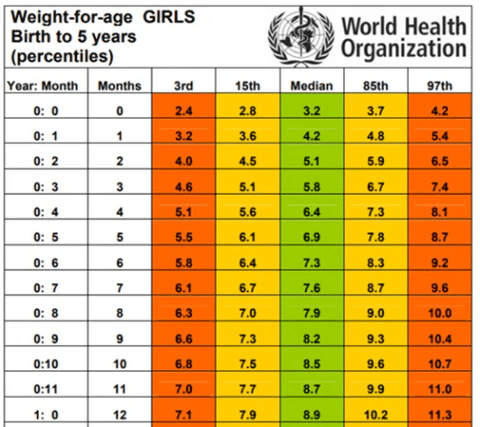
Baby Weight Chart for Girls (0–24 Months)
(Approximate WHO standards)
| Age | 5th %ile | 50th %ile (Average) | 95th %ile |
|---|---|---|---|
| Birth | 2.4 kg | 3.2 kg | 4.2 kg |
| 1 month | 3.4 kg | 4.2 kg | 5.5 kg |
| 2 months | 4.2 kg | 5.1 kg | 6.6 kg |
| 3 months | 4.8 kg | 5.8 kg | 7.5 kg |
| 4 months | 5.2 kg | 6.4 kg | 8.2 kg |
| 5 months | 5.6 kg | 6.9 kg | 8.7 kg |
| 6 months | 5.9 kg | 7.3 kg | 9.2 kg |
| 9 months | 6.8 kg | 8.2 kg | 10.2 kg |
| 12 months | 7.5 kg | 8.9 kg | 11.0 kg |
| 18 months | 8.7 kg | 10.2 kg | 12.5 kg |
| 24 months | 9.8 kg | 11.5 kg | 13.9 kg |
How to Read the Chart
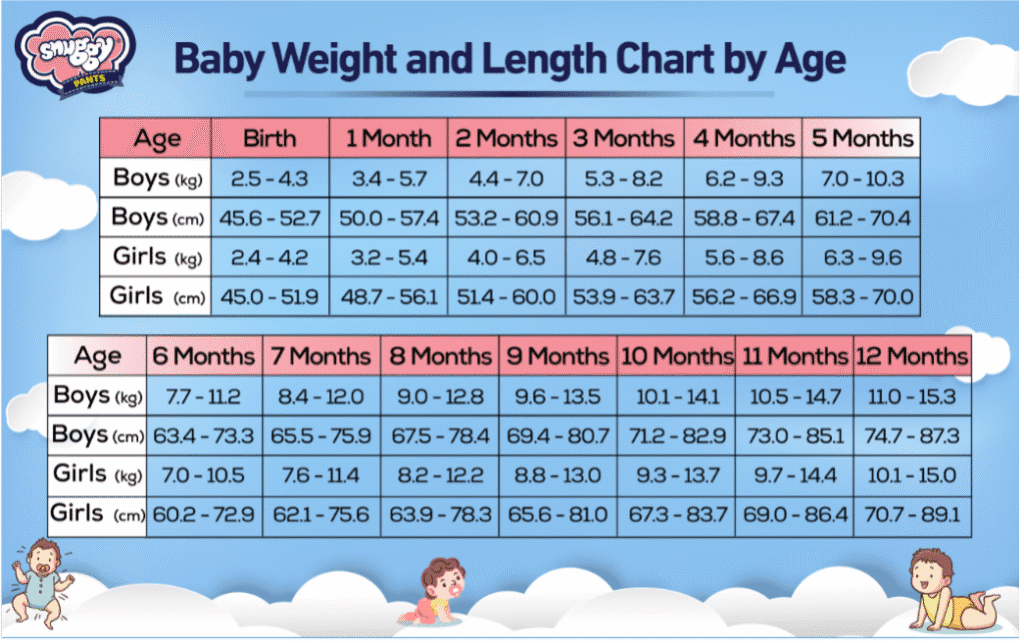
To use the chart:
- Find your baby’s age (rounded to the nearest month).
- Look across the row to find the average weight and common percentile ranges.
- Compare your baby’s weight to the chart.
If your baby is:
- Above the 50th percentile: They weigh more than half of children their age.
- Below the 50th percentile: They weigh less than half of children their age.
- Steadily following any percentile: This is usually normal and healthy.
A sudden jump or drop across percentiles may need medical evaluation.
Factors Affecting Baby Weight
Every baby is different, and several natural factors influence weight:
1. Genetics
Parents’ height, weight, and body type often influence the baby’s growth pattern.
2. Feeding Type
- Breastfed babies may gain slower weight after 4–6 months but are still healthy.
- Formula-fed babies often gain weight slightly faster.
3. Birth Weight
Premature or low-birth-weight babies may take time to catch up.
Large babies may grow more slowly later as they balance out.
4. Health Conditions
In rare cases, digestive issues, allergies, or metabolic conditions may affect growth.
5. Nutrition and Feeding Habits
How often and how well the baby feeds plays a major role.
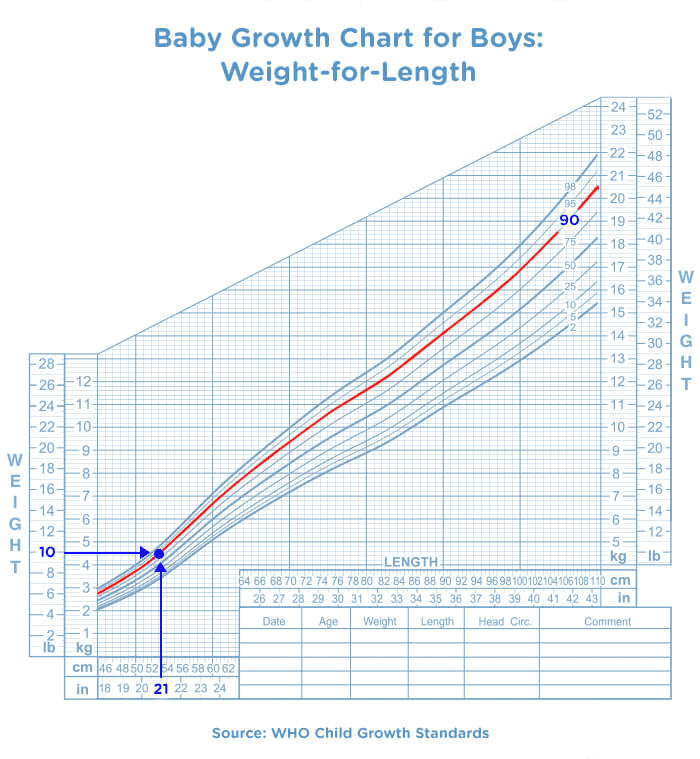
Healthy Weight Gain Patterns
Typical weight gain patterns:
- First 3 months: Babies gain about 150–200 grams per week.
- 3 to 6 months: About 100–150 grams per week.
- 6 to 12 months: About 70–100 grams per week.
- After 1 year: Growth slows down naturally.
A baby usually doubles their birth weight by 5 months and triples it by 1 year.
When to Be Concerned
Consider speaking with a pediatrician if:
- Your baby loses weight unexpectedly.
- Weight gain stops for 2 months or more.
- The baby crosses multiple percentile lines downward.
- There are feeding difficulties, vomiting, diarrhea, or lethargy.
Remember, the goal is to identify consistent patterns, not to focus on a single measurement.
Tips to Support Healthy Baby Weight
- Ensure proper positioning during breastfeeding for effective milk transfer.
- Feed on demand, especially during early months.
- Monitor diaper output—6 or more wet diapers daily usually indicate adequate nutrition.
- Introduce solids around 6 months following pediatric guidance.
- Provide balanced meals rich in iron, healthy fats, fruits, and vegetables after solids begin.
- Keep regular check-ups with a pediatrician.
Conclusion
A baby health weight chart is an excellent tool for monitoring your child’s growth and ensuring they are developing well. While comparisons can be helpful, remember that every baby is unique. What matters most is consistent growth over time, proper nutrition, and overall well-being. If you ever feel unsure about your baby’s weight or development, consulting a pediatrician is the best way to get personalized advice and reassurance.