
Breastfeeding Positions for New Mothers: A Complete Guide for Comfort and Success
Breastfeeding is a beautiful and natural way to nourish your baby, but for many new mothers, it can also be challenging in the early days. One of the most common reasons mothers experience discomfort, nipple pain, or poor milk transfer is incorrect positioning. Learning the right breastfeeding positions can make feeding more comfortable, help your baby latch properly, and support a healthy milk supply.
Every mother and baby pair is unique, so there is no single “best” position for everyone. The key is to find positions that keep both you and your baby relaxed and well supported. In this guide, we’ll explore the most effective breastfeeding positions for new mothers, along with tips to ensure a good latch and a successful feeding experience.
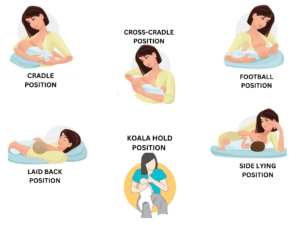
Why Breastfeeding Position Matters
Proper breastfeeding position is essential for several reasons:
- Helps baby latch deeply and effectively
- Reduces nipple pain, soreness, and cracks
- Prevents issues like blocked milk ducts and engorgement
- Supports efficient milk flow and digestion
- Makes feeding more comfortable for the mother
When your baby is positioned correctly, feeding becomes easier, more enjoyable, and less stressful for both of you.
Signs of a Good Breastfeeding Position
Before exploring specific positions, it’s helpful to know what correct positioning looks like:
- Baby’s head and body are in a straight line
- Baby’s nose is opposite the nipple
- Baby’s body is facing the mother (tummy to tummy)
- Mother feels no pain after initial latch-on
- Baby is able to suck and swallow rhythmically
If you notice pain, clicking sounds, or poor weight gain, adjusting the position can often solve the problem.
1. Cradle Hold
The cradle hold is one of the most commonly used breastfeeding positions and is often the first one new mothers learn.
How to Do It:
- Sit upright in a comfortable chair
- Hold your baby in your arm on the same side as the breast you are feeding from
- Baby’s head rests in the crook of your elbow
- Baby’s body faces yours, tummy to tummy
- Support your breast with the opposite hand if needed
Best For:
- Full-term babies
- Mothers who are comfortable with basic breastfeeding
- Daytime feeds
Tips:
- Use pillows to support your arm and baby
- Make sure baby’s ear, shoulder, and hip are aligned
2. Cross-Cradle Hold
The cross-cradle hold is similar to the cradle hold but gives the mother more control over the baby’s head and latch.
How to Do It:
- Hold your baby with the arm opposite the feeding breast
- Support baby’s head and neck with your hand
- Use your other hand to support the breast
- Guide baby to the nipple when they open their mouth wide
Best For:
- Newborns
- Babies learning to latch
- Mothers experiencing latch difficulties
Tips:
- Ideal for early days of breastfeeding
- Switch to cradle hold once baby latches well
3. Football Hold (Clutch Hold)
The football hold involves holding your baby beside your body, tucked under your arm like a football.
How to Do It:
- Sit comfortably with pillows at your side
- Place baby under your arm on the same side as the feeding breast
- Support baby’s head with your hand
- Baby’s legs point toward your back
Best For:
- Mothers who had a C-section
- Mothers with large breasts
- Premature or small babies
- Mothers with twins
Tips:
- Keep baby’s nose level with the nipple
- Use pillows to prevent arm strain
4. Side-Lying Position
The side-lying position allows both mother and baby to lie on their sides while breastfeeding.
How to Do It:
- Lie on your side with baby facing you
- Align baby’s mouth with your nipple
- Support your back with pillows
- Use your free hand to guide the breast if needed
Best For:
- Nighttime feeds
- Mothers recovering from childbirth
- Mothers who feel tired or sore
Tips:
- Ensure baby is safely positioned
- Avoid sleeping while feeding unless advised by a professional
5. Laid-Back (Biological Nurturing) Position
The laid-back breastfeeding position uses gravity to help the baby latch naturally.
How to Do It:
- Recline comfortably on a bed or couch
- Place baby on your chest, tummy down
- Let baby move toward the breast and latch
Best For:
- Newborns
- Mothers with fast milk let-down
- Babies who struggle with traditional positions
Tips:
- Relax and let baby lead
- Support baby’s body as needed
6. Upright or Koala Hold
In the upright breastfeeding position, the baby sits straddling the mother’s thigh, facing the breast.
How to Do It:
- Sit baby upright on your lap
- Support baby’s head and neck
- Guide baby to latch
Best For:
- Babies with reflux
- Babies with ear infections
- Older babies with better head control
Tips:
- Keep baby’s spine straight
- Useful for quick feeds
Common Breastfeeding Position Mistakes to Avoid
New mothers often make small mistakes that can affect comfort and milk transfer:
- Leaning forward instead of bringing baby to the breast
- Not supporting baby’s head and neck properly
- Allowing baby’s body to twist away
- Ignoring pain during feeding
Correcting these mistakes early can prevent long-term breastfeeding problems.
Helpful Tips for Comfortable Breastfeeding
- Use pillows or nursing cushions for support
- Choose a quiet, relaxed feeding environment
- Switch positions to prevent soreness
- Burp your baby after feeding
- Stay hydrated and maintain a healthy diet
If pain or difficulties persist, consulting a lactation expert can be very helpful.
When to Seek Help
You should seek professional help if:
- Breastfeeding is painful beyond the first few days
- Baby is not gaining weight
- Nipples are cracked or bleeding
- Baby struggles to latch in any position
Early support can make a big difference in breastfeeding success.
Conclusion
Finding the right breastfeeding positions for new mothers is a key step toward a comfortable and successful breastfeeding journey. Whether you prefer the cradle hold, football hold, side-lying, or laid-back position, the goal is always the same: comfort, proper latch, and effective feeding.
Every mother-baby pair is unique, so don’t hesitate to experiment with different positions until you find what works best for you. With patience, practice, and the right support, breastfeeding can become a rewarding and bonding experience for both mother and baby.