
How to Store Breast Milk Safely: A Complete Guide for New Parents
Meta Description
Learn how to store breast milk safely with this complete guide for new parents. Know proper storage methods, temperatures, containers, and safety tips to keep breast milk fresh and nutritious for your baby.
Breast milk is often called “liquid gold” because of its unmatched nutritional and immune benefits for babies. For Breastfeeding mothers, especially working moms or those who pump milk regularly, knowing how to store breast milk safely is extremely important. Proper storage helps maintain the quality, nutrients, and safety of breast milk, ensuring your baby receives the best possible nourishment.
This detailed guide explains everything parents need to know about breast milk storage, from pumping and containers to temperature guidelines and safety tips.
Why Proper Breast Milk Storage Is Important
Breast milk contains essential nutrients, antibodies, and enzymes that support a baby’s growth and protect against infections. Improper storage can lead to bacterial growth and nutrient loss, making the milk unsafe for your baby. By following correct storage guidelines, you can safely use expressed milk without compromising its quality.
Safe storage also reduces waste and allows flexibility in feeding schedules, especially for mothers returning to work or managing busy routines.
When Should You Store Breast Milk?
You may need to store breast milk in several situations, such as:
- When pumping milk for later use
- When returning to work or traveling
- If your baby cannot feed directly at the breast
- To build a backup supply for emergencies
- To allow other caregivers to feed the baby
Expressed breast milk can be safely stored for different durations depending on where and how it is stored.
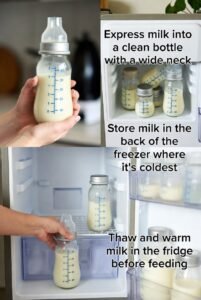
Best Containers for Storing Breast Milk
Choosing the right container is the first step in safe storage.
Recommended Containers
- Breast milk storage bags (BPA-free, designed specifically for milk)
- Glass containers with tight lids
- Hard plastic containers labeled BPA-free
Containers to Avoid
- Disposable bottle liners
- Regular plastic bags
- Containers not meant for food storage
Always use clean, sterilized containers to prevent contamination.
How to Store Freshly Expressed Breast Milk
Freshly expressed breast milk can be stored at room temperature, in the refrigerator, or in the freezer.
Room Temperature Storage
- Safe for up to 4 hours at temperatures below 25°C (77°F)
- Keep the milk covered and away from direct sunlight
- In very warm climates, shorter storage time is safer
Refrigerator Storage
- Store at 4°C (39°F) or colder
- Safe for up to 4 days
- Place milk at the back of the fridge, not in the door
Freezer Storage
- Best for long-term storage
- Store milk at -18°C (0°F) or below
- Can be safely stored for 6 months, and up to 12 months in deep freezers
Breast Milk Storage Guidelines Chart
| Storage Location | Temperature | Safe Duration |
|---|---|---|
| Room temperature | Up to 25°C | 4 hours |
| Refrigerator | 4°C or colder | 4 days |
| Freezer (fridge) | -18°C | 6 months |
| Deep freezer | -18°C or lower | 12 months |
Following these guidelines ensures the milk remains safe and nutritious.
Labeling Stored Breast Milk Correctly
Always label stored breast milk clearly to avoid confusion.
Include:
- Date of expression
- Time of expression
- Baby’s name (important for daycare use)
Use waterproof labels or permanent markers. Always use the oldest milk first (first in, first out method).
How to Freeze Breast Milk Safely
When freezing breast milk:
- Leave some space in the container for expansion
- Freeze milk in small portions (60–120 ml)
- Store milk flat to save freezer space
- Avoid mixing freshly pumped warm milk with frozen milk
Freezing in smaller quantities helps reduce waste and allows easy thawing.
How to Thaw and Warm Stored Breast Milk
Thawing breast milk correctly is just as important as storing it.
Safe Thawing Methods
- Thaw overnight in the refrigerator
- Hold container under lukewarm running water
- Place in a bowl of warm water
What to Avoid
- Do not microwave breast milk
- Do not boil breast milk
- Do not refreeze thawed milk
Once thawed, breast milk should be used within 24 hours if refrigerated.
How to Check If Stored Breast Milk Is Safe
Stored breast milk may naturally separate into layers, which is normal.
Signs milk is still safe:
- Mild, soapy smell is normal
- Milk mixes easily when gently swirled
Signs milk should be discarded:
- Sour or rotten smell
- Clumpy texture that doesn’t mix
- Milk stored beyond recommended time
When in doubt, it is safer to discard the milk.
Hygiene Tips for Safe Breast Milk Storage
Maintaining hygiene is essential throughout the process.
- Wash hands before pumping or handling milk
- Clean and sterilize pump parts regularly
- Use clean storage containers every time
- Avoid touching the inside of containers or lids
Proper hygiene greatly reduces the risk of contamination.
Breast Milk Storage Tips for Working Mothers
Working mothers can manage breast milk storage with good planning.
- Pump at regular intervals to maintain supply
- Carry an insulated cooler bag with ice packs
- Store milk in the office refrigerator if available
- Transport milk home safely within 24 hours
Being organized helps maintain milk quality and reduces stress.
Common Mistakes to Avoid When Storing Breast Milk
Avoid these common errors:
- Storing milk in the refrigerator door
- Overfilling storage containers
- Forgetting to label milk
- Mixing old and new milk improperly
- Using unclean pumping equipment
Avoiding these mistakes ensures your baby’s safety.
Proper breast milk storage helps preserve nutrients, prevents contamination, and ensures safe feeding. Following correct storage guidelines gives parents confidence while supporting baby’s healthy growth and development every day.
Final Thoughts
Learning how to store breast milk safely empowers parents to provide the best nutrition for their baby even when direct Breastfeeding is not possible. By using clean containers, following temperature guidelines, and maintaining good hygiene, you can preserve the quality and benefits of breast milk with confidence.
Safe breast milk storage not only supports your baby’s health but also gives parents peace of mind and flexibility in their daily routine.