Baby Food Allergies: Signs and Prevention – A Complete Guide for Parents
Food allergies in babies are a growing concern for many parents, especially when solid foods are introduced. While most babies tolerate new foods well, some may experience allergic reactions that range from mild to severe. Understanding baby food allergies: signs and prevention helps parents act quickly, reduce risks, and feed their babies with confidence.
This guide explains what food allergies are, how to recognize early warning signs, and practical steps parents can take to prevent allergic reactions.
What Are Food Allergies in Babies?
A food allergy occurs when a baby’s immune system mistakenly identifies a certain food protein as harmful. The immune system reacts by releasing chemicals that cause allergy symptoms. Food allergies are different from food intolerances, which usually involve digestive discomfort but do not trigger the immune system.
Food allergies can appear the first time a baby eats a food or after repeated exposure.
When Do Baby Food Allergies Usually Appear?
Food allergies commonly appear:
- When Baby solid foods are introduced (around 6 months)
- During the early toddler years
- When allergenic foods are introduced for the first time
Some babies may show symptoms within minutes, while others may react hours later.
Common Foods That Cause Allergies in Babies
Certain foods are more likely to trigger allergic reactions.
Common Allergenic Foods
- Cow’s milk
- Eggs
- Peanuts
- Tree nuts
- Soy
- Wheat
- Fish
- Shellfish
Introducing these foods carefully and one at a time is important for early detection.
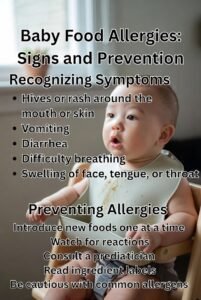
Signs and Symptoms of Baby Food Allergies
Recognizing early symptoms allows parents to respond quickly.
Skin Reactions
- Hives or red itchy rashes
- Swelling of lips, face, or eyes
- Eczema flare-ups
Digestive Symptoms
- Vomiting
- Diarrhea
- Blood or mucus in stools
- Stomach pain or discomfort
Respiratory Symptoms
- Sneezing or runny nose
- Coughing or wheezing
- Difficulty breathing
Severe Reaction (Anaphylaxis)
- Swelling of throat
- Trouble breathing
- Pale skin or dizziness
- Sudden drop in blood pressure
Anaphylaxis is a medical emergency and requires immediate care.
Difference Between Food Allergy and Food Intolerance
Understanding the difference helps parents respond correctly.
| Food Allergy | Food Intolerance |
|---|---|
| Immune system reaction | Digestive system reaction |
| Can be life-threatening | Usually mild |
| Symptoms may appear quickly | Symptoms appear slowly |
| Small amount triggers reaction | Depends on quantity |
Food intolerance does not cause hives or breathing problems.
How Are Baby Food Allergies Diagnosed?
If a food allergy is suspected, a pediatrician may recommend:
- Detailed food history
- Elimination diet
- Skin prick test
- Blood test (IgE test)
Never attempt diagnosis at home without medical guidance.
How to Introduce New Foods Safely
Safe food introduction reduces allergy risks.
Follow the 3-Day Rule
- Introduce one new food at a time
- Wait 2–3 days before introducing another
- Watch for any reaction
Start With Small Amounts
- Begin with a small spoon
- Increase quantity gradually
Offer Foods at Home
- Avoid introducing new foods during travel
- Feed during daytime for easy monitoring
Can Baby Food Allergies Be Prevented?
While not all allergies can be prevented, certain practices can reduce the risk.
Continue Breastfeeding
Breast milk supports immune development and may lower allergy risk.
Introduce Allergenic Foods Early
Current research suggests that introducing allergenic foods (like peanut or egg) between 6–12 months may help reduce allergy development when done safely.
Avoid Delaying Solid Foods
Delaying solids beyond 6 months may increase allergy risk.
Foods That Help Build Baby’s Immune System
A strong immune system may help reduce allergic responses.
- Fruits and vegetables rich in antioxidants
- Yogurt with probiotics (after 6–8 months)
- Whole grains
- Breast milk or formula
Balanced nutrition supports immune health.
Tips to Prevent Baby Food Allergies
- Introduce foods gradually
- Avoid force-feeding
- Maintain a food diary
- Read food labels carefully
- Avoid cross-contamination
- Keep allergenic foods separate
Being cautious does not mean avoiding healthy foods altogether.
What to Do If Your Baby Has an Allergic Reaction
Mild Reaction
- Stop feeding the food
- Observe symptoms
- Contact pediatrician
Moderate to Severe Reaction
- Seek medical help immediately
- Use prescribed emergency medication if available
- Do not wait for symptoms to worsen
Quick action can be life-saving.
Managing baby food allergies can feel overwhelming, but with the right knowledge and preparation, parents can confidently support their baby’s nutrition. One important step is creating a calm and positive feeding environment. Babies can sense parental anxiety, which may affect their willingness to try new foods. Staying relaxed during mealtimes encourages healthy eating habits.
Keeping a detailed food diary is especially helpful. Note the foods introduced, quantities, and any reactions observed. This record can help pediatricians or allergists identify triggers more accurately. Parents should also be aware that mild reactions may become stronger with repeated exposure, so early medical advice is essential.
It is equally important to educate caregivers, grandparents, and daycare providers about your baby’s allergies. Clear instructions, written notes, and emergency contact details can prevent accidental exposure. Reading packaged food labels every time is crucial, as ingredients and manufacturing processes may change.
As babies grow, some food allergies may resolve naturally, while others may persist. Regular follow-ups with a pediatrician help reassess allergies safely. With careful food introduction, awareness of symptoms, and professional guidance, parents can ensure their baby receives balanced nutrition while minimizing allergy-related risks and stress.
When to See a Doctor
Consult a pediatrician if:
- Baby reacts to multiple foods
- Family history of allergies exists
- Baby has severe eczema
- Symptoms worsen or recur
Early evaluation ensures proper management.
Living With Baby Food Allergies
Managing food allergies requires awareness and planning.
- Inform caregivers and daycare staff
- Carry emergency instructions
- Read labels every time
- Reassess allergies as baby grows
Many children outgrow certain food allergies over time.
Final Thoughts
Understanding baby food allergies: signs and prevention helps parents protect their baby’s health while introducing a wide variety of nutritious foods. Early recognition of symptoms, safe food introduction practices, and proper medical guidance can significantly reduce risks.
With patience, awareness, and informed feeding practices, parents can confidently support their baby’s nutrition while minimizing allergy concerns.