
Common Parenting Mistakes to Avoid: A Practical Guide for Modern Parents
Parenting is one of the most rewarding yet challenging responsibilities in life. Every parent wants the best for their child, but even with good intentions, mistakes can happen. These common parenting mistakes are often unintentional and influenced by stress, lack of information, or societal pressure. Understanding and avoiding them can help create a nurturing environment that supports a child’s emotional, physical, and mental development.
This guide highlights the most common parenting mistakes and provides practical solutions to help parents raise confident, happy, and emotionally secure children.
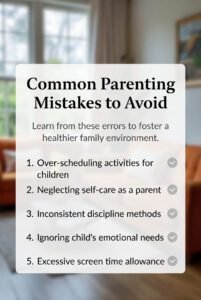
1. Setting Unrealistic Expectations
One of the most common parenting mistakes is expecting too much too soon from children. Every child develops at their own pace. Comparing your child to others or expecting adult-like behavior can lead to frustration for both parents and children.
Why it’s harmful:
Unrealistic expectations can lower a child’s self-esteem and increase anxiety. Children may feel they are never good enough.
What to do instead:
Understand developmental milestones and appreciate your child’s unique abilities. Encourage effort rather than perfection.
2. Inconsistent Discipline
Inconsistent rules and consequences confuse children. When parents sometimes allow certain behaviors and punish them at other times, children struggle to understand boundaries.
Why it’s harmful:
Inconsistency can lead to behavioral issues and testing of limits.
What to do instead:
Set clear rules and follow them consistently. Make sure all caregivers are on the same page regarding discipline.
3. Overprotecting Your Child
While protecting children is natural, excessive control can limit their independence and problem-solving skills.
Why it’s harmful:
Overprotected children may develop fear of failure and lack confidence in decision-making.
What to do instead:
Allow children to explore, make mistakes, and learn from experiences in a safe environment.
4. Not Listening to Your Child
Parents often assume they know what their child feels or needs without truly listening. Dismissing emotions or interrupting can make children feel unheard.
Why it’s harmful:
Poor communication can weaken the parent-child bond and reduce emotional trust.
What to do instead:
Practice active listening. Maintain eye contact, acknowledge feelings, and respond calmly.
5. Excessive Screen Time
Screens are a common part of modern life, but excessive use can negatively impact a child’s development.
Why it’s harmful:
Too much screen time can affect sleep, attention span, and social skills.
What to do instead:
Set screen time limits and encourage outdoor play, reading, and family interactions.
6. Comparing Your Child to Others
Comparison is a silent confidence killer. Every child has unique strengths and weaknesses.
Why it’s harmful:
Comparisons can create jealousy, resentment, and low self-confidence.
What to do instead:
Celebrate your child’s individual achievements and progress rather than comparing them to siblings or peers.
7. Using Harsh Punishment
Yelling, spanking, or harsh punishments may produce short-term compliance but long-term emotional damage.
Why it’s harmful:
Harsh discipline can increase aggression and fear while reducing trust.
What to do instead:
Use positive discipline techniques such as explaining consequences, time-outs, and reinforcing good behavior.
8. Ignoring Emotional Development
Focusing only on academics and physical growth while ignoring emotional needs is a common oversight.
Why it’s harmful:
Children may struggle with emotional regulation and relationships later in life.
What to do instead:
Teach children to identify and express emotions. Encourage empathy and emotional intelligence.
9. Doing Everything for Your Child
Parents often step in too quickly to solve problems, complete tasks, or make decisions.
Why it’s harmful:
Children may become dependent and lack confidence in their abilities.
What to do instead:
Encourage independence by allowing children to try, fail, and succeed on their own.
10. Lack of Quality Time
Busy schedules can reduce meaningful parent-child interaction.
Why it’s harmful:
Children may feel neglected or emotionally distant.
What to do instead:
Spend intentional, distraction-free time together, even if it’s just a few minutes daily.
11. Inconsistent Routines
Children thrive on predictability. Irregular sleep, meal, and activity schedules can create stress.
Why it’s harmful:
Lack of routine can lead to behavioral and sleep issues.
What to do instead:
Establish consistent daily routines to help children feel secure.
12. Not Being a Role Model
Children learn more from actions than words. Negative habits displayed by parents can be easily copied.
Why it’s harmful:
Contradictory behavior confuses children and weakens discipline.
What to do instead:
Model respect, patience, healthy habits, and positive communication.
13. Avoiding Apologies
Many parents hesitate to apologize, fearing it undermines authority.
Why it’s harmful:
Refusing to admit mistakes can teach children unhealthy behavior patterns.
What to do instead:
Apologize sincerely when wrong. This teaches accountability and respect.
14. Ignoring Self-Care as a Parent
Burnout affects parenting quality. Exhausted parents are more likely to react negatively.
Why it’s harmful:
Stress can lead to impatience and emotional distance.
What to do instead:
Prioritize self-care. A healthy parent is better equipped to raise a healthy child.
Conclusion
Conscious Parenting is a continuous learning journey. Mistakes are natural, but recognizing and correcting them can make a significant difference in a child’s growth and happiness. By avoiding these common parenting mistakes and focusing on empathy, consistency, and communication, parents can create a positive and supportive environment for their children.
Another common parenting mistake is expecting instant behavior change. Children need time, repetition, and patience to learn new habits. When parents become frustrated too quickly, it can discourage children from trying again. Consistency and calm guidance are key to long-term behavior improvement. Additionally, avoiding open communication about mistakes can prevent growth. Children benefit when parents explain what went wrong and how to improve next time. Creating a safe space for learning from mistakes helps children develop responsibility, resilience, and emotional maturity. Remember, effective parenting focuses on guidance rather than control, helping children grow into confident and capable individuals.
Remember, perfection is not the goal—connection is. Small, mindful changes in daily parenting habits can have a lasting positive impact on your child’s future.