
How to Encourage Crawling and Walking: A Complete Guide for Parents
Introduction
Watching your baby achieve physical Milestones like crawling and walking is an exciting part of parenthood. These movements mark growing independence, strength, and confidence. While babies naturally develop at their own pace, parents play an important role in creating a supportive environment that encourages healthy motor development.
Some babies crawl early, others skip crawling and go straight to walking. Both can be normal. However, providing the right stimulation, safe spaces, and daily practice can make a big difference in helping your baby build the skills needed to move confidently. This guide explores how to encourage crawling and walking, developmental milestones, effective activities, and important safety tips.
Understanding Crawling and Walking Milestones
Every baby follows a unique developmental timeline. Knowing general milestones helps parents understand what to expect.
Crawling Milestones
- 6–7 months: Baby rocks on hands and knees
- 7–9 months: Begins crawling forward or backward
- 9–10 months: Crawls confidently and explores surroundings
Walking Milestones
- 9–12 months: Pulls to stand and cruises along furniture
- 12–15 months: Takes first independent steps
- 15–18 months: Walks steadily without support
Some babies use alternative movements like bottom-shuffling or rolling before crawling. These variations are usually normal.
Why Crawling Is Important
Crawling strengthens muscles, improves coordination, and supports brain development. It helps babies develop balance, spatial awareness, and problem-solving skills. Crawling also encourages exploration, which stimulates curiosity and learning.
Even if your baby skips crawling, providing opportunities for floor movement still benefits muscle and brain growth.
Why Walking Matters
Walking opens a new world of independence. It strengthens leg muscles, improves posture, and builds confidence. Walking also supports cognitive development as babies learn to navigate spaces and interact more freely with their environment.
When to Start Encouraging Movement
You can begin supporting motor development from early infancy through activities like tummy time. As your baby grows, gradually introduce activities that strengthen arms, legs, and core muscles.
By six months, babies are usually ready for more active floor play, which naturally leads to crawling and standing attempts.
Effective Tips to Encourage Crawling
1. Practice Daily Tummy Time
Tummy time strengthens the neck, shoulders, and core muscles necessary for crawling. Aim for multiple short sessions daily.
2. Create a Safe Floor Space
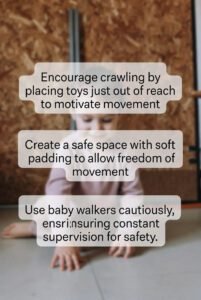
A clean, soft play mat allows babies to move freely and safely.
3. Use Toys as Motivation
Place colorful toys just out of reach to encourage your baby to move forward.
4. Get Down on the Floor
Lie beside your baby and encourage movement through smiles and interaction.
5. Reduce Time in Baby Gear
Limit long periods in strollers, bouncers, or car seats. Floor time is essential for movement practice.
6. Help Baby Rock on Hands and Knees
Gently guide your baby into a crawling position to build confidence.
Fun Activities to Promote Crawling
- Tunnel play using cardboard boxes
- Rolling a ball across the floor
- Obstacle courses with cushions
- Mirror play to attract attention
- Parent-to-baby crawling races
These playful activities strengthen muscles while keeping babies engaged.
How to Encourage Standing and Walking
1. Support Pull-to-Stand Practice
Place your baby near stable furniture to encourage standing.
2. Offer Push Toys
Baby walkers or push toys provide balance support for early steps.
3. Hold Hands for Assisted Walking
Let your baby practice stepping while holding your hands.
4. Barefoot Practice
Walking barefoot improves balance and foot strength.
5. Praise Every Attempt
Positive reinforcement builds confidence and motivation.
Safe Walking Environment Tips
- Remove sharp furniture edges
- Use non-slip rugs
- Install safety gates near stairs
- Ensure stable furniture for cruising
- Keep floors clutter-free
Safety-proofing your home helps prevent injuries during exploration.
Common Concerns About Crawling and Walking
My Baby Isn’t Crawling Yet
Some babies skip crawling. If your baby sits well, bears weight on legs, and shows interest in movement, there’s usually no concern.
My Baby Walks on Toes
Occasional toe walking is normal in early walkers. Persistent toe walking should be discussed with a pediatrician.
My Baby Falls Often While Learning to Walk
Falling is part of the learning process. Supervise and provide safe surroundings.
When to Seek Medical Advice
Consult a pediatrician if your baby:
- Doesn’t sit by 9 months
- Doesn’t crawl or show movement attempts by 12 months
- Doesn’t stand with support by 12 months
- Doesn’t walk by 18 months
Early evaluation ensures timely guidance if needed.
Role of Play in Motor Development
Play is the best teacher for babies. Simple floor games, interactive play, and exploration strengthen muscles and coordination naturally. Avoid rushing milestones; gentle encouragement works best.
Crawling and Brain Development Connection
Crawling supports left-right brain coordination, which is linked to reading and problem-solving skills later. Cross-body movement during crawling builds strong neural connections.
Benefits of Independent Walking
- Boosts self-confidence
- Encourages social interaction
- Improves overall fitness
- Enhances curiosity
- Builds independence
Each step is a major achievement worth celebrating.
Frequently Asked Questions
Can baby walkers help with walking?
Stationary push walkers are helpful. Avoid wheeled sit-in walkers, as they may delay development and pose safety risks.
What shoes are best for early walkers?
Soft, flexible shoes or barefoot walking indoors are best.
Should I force my baby to walk?
Never force. Allow natural development with gentle encouragement.
Final Thoughts
Crawling and walking are important milestones that mark your baby’s growing strength and independence. With tummy time, floor play, supportive tools, and a safe environment, parents can effectively encourage natural movement development.
Remember, each baby has their own pace. Celebrate progress, offer encouragement, and enjoy this exciting stage of your Baby’s growth journey.
Every baby discovers movement in their own special way. Some roll, some crawl, and others take tiny steps sooner than expected. Parents can gently guide this journey by offering safe spaces, playful challenges, and warm encouragement. Simple activities like placing toys slightly out of reach or holding little hands during first steps build trust and strength. Avoid comparing your baby with others, as each child grows at a personal rhythm. Celebrate every wiggle, crawl, and wobbling step, because these moments shape confidence, independence, and lifelong physical abilities.