
How Babies Learn to Recognize Faces: A Complete Development Guide for Parents
From the very first moments after birth, babies begin an incredible journey of discovery. Among the earliest and most important skills they develop is the ability to recognize faces. Facial recognition is not just a cute milestone; it plays a vital role in emotional bonding, communication, and brain development. Understanding how babies learn to recognize faces can help parents support their child’s social and cognitive growth from day one.
In this guide, we’ll explore the science behind facial recognition in infants, key developmental stages, and practical tips to nurture this essential skill.
Why Face Recognition Is Important for Babies
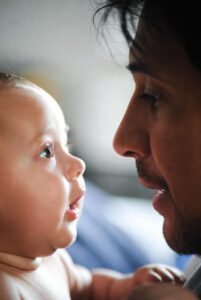
Human beings are social by nature, and babies are born ready to connect. Recognizing faces allows infants to identify caregivers, feel safe, and form emotional attachments. This skill also supports later language development, empathy, and social interaction.
When a baby recognizes a familiar face, they begin to understand relationships. Smiles, eye contact, and expressions become meaningful forms of communication. Without facial recognition, emotional bonding and social learning would be significantly delayed.
Are Babies Born Recognizing Faces?
Babies are not born recognizing specific faces, but they are born with a natural preference for face-like patterns. Studies show that newborns will turn their heads toward shapes resembling faces rather than random objects. This instinctive behavior helps them focus on caregivers right from birth.
However, newborn vision is still developing. At birth, babies can only see clearly about 8–12 inches away — roughly the distance between a parent’s face and the baby during Feeding. This limited but purposeful vision ensures that faces become their primary focus in the early weeks.
The First Month: Early Face Awareness
In the first few weeks, babies can’t distinguish one face from another, but they show strong interest in facial features. They will stare at eyes, follow a moving face, and respond to smiles with reflexive expressions.
At this stage, babies rely mostly on contrast. They are drawn to dark eyes, eyebrows, and hairlines. This is why holding your baby close and making eye contact during feeding or cuddling is so important. These repeated interactions help their brain start building memory patterns for faces.
2 to 3 Months: Recognizing Familiar Faces
By around two months, babies begin recognizing familiar faces, especially their parents or primary caregivers. They may smile more quickly at a familiar person, show excitement when they see you, and calm down faster in your presence.
This is the stage where social smiling truly develops. A baby’s smile becomes a response to recognition rather than just a reflex. This emotional connection strengthens bonding and encourages more interaction, creating a positive feedback loop for learning.
4 to 6 Months: Improved Visual Memory
Between four and six months, babies develop stronger visual memory and can differentiate between familiar and unfamiliar faces. They may become cautious or curious around strangers, a sign that they understand the difference between known and unknown people.
Babies also begin focusing on detailed features like the shape of the nose, mouth, and facial expressions. They learn to interpret emotions by observing smiles, frowns, and tone of voice. This stage is essential for emotional intelligence development.
7 to 12 Months: Strong Recognition and Stranger Anxiety
During this period, facial recognition skills grow rapidly. Babies now remember faces even after some time apart. They may reach for parents, show clear preferences, and display stranger anxiety — a normal developmental sign that they recognize familiar caregivers and feel secure with them.
They also start imitating facial expressions, sticking out their tongue, or copying smiles. This imitation is part of early communication learning and strengthens social understanding.
Toddler Stage: Understanding Identity and Expressions
By the time babies become toddlers, they can recognize family members in photos, identify themselves in mirrors, and understand emotional expressions more deeply. They begin responding to name calls, pointing to people they know, and reacting appropriately to different emotions.
This advanced facial recognition helps with language development, social play, and building friendships later in childhood.
How the Brain Learns Facial Recognition
Facial recognition involves multiple parts of the brain working together. When a baby looks at a face repeatedly, neural connections strengthen, forming memory patterns. The more exposure a baby has to faces, the stronger these brain pathways become.
Eye contact, voice, touch, and facial expressions all work together to help babies remember people. This multisensory learning accelerates cognitive development and emotional security.
Factors That Influence Face Recognition Development
Several elements affect how quickly babies learn to recognize faces:
- Frequency of interaction – Regular face-to-face time improves learning
- Lighting and visibility – Well-lit environments help visual clarity
- Emotional connection – Warm interactions strengthen memory
- Healthy vision development – Clear eyesight supports recognition
- Consistent caregivers – Familiar faces build stronger recognition patterns
Simple Ways Parents Can Support Facial Recognition
You don’t need special tools to help your baby develop facial recognition. Everyday activities are enough.
Make eye contact often: Hold your baby close and let them study your face.
Talk and smile: Facial expressions combined with speech reinforce recognition.
Play peek-a-boo: This teaches object and face permanence.
Use mirrors: Babies enjoy looking at faces, including their own reflection.
Show family photos: Point to faces and name people.
Limit screen exposure: Real human faces are more beneficial than digital ones.
These small daily habits make a big impact on your baby’s brain development.
When to Be Concerned
Every baby develops at their own pace, but consult a pediatrician if your baby:
- Avoids eye contact consistently
- Doesn’t respond to familiar faces by 4–5 months
- Shows no social smiles by 3 months
- Seems uninterested in people’s faces
Early support can help address potential vision or developmental concerns.
The Emotional Impact of Face Recognition
Facial recognition isn’t only about vision — it’s about love, trust, and emotional security. When a baby recognizes a parent’s face, they feel safe. This sense of safety builds confidence, reduces stress, and supports overall healthy development.
Strong early bonding also influences long-term emotional well-being and social skills later in life.
Final Thoughts
Watching your baby learn to recognize your face is one of the most beautiful parenting moments. From early curiosity to joyful smiles and secure attachment, facial recognition plays a foundational role in your Baby’s growth journey.
By offering warm interactions, consistent presence, and plenty of face-to-face time, you give your baby the best environment to develop strong social and cognitive skills. Remember, every smile you share is helping your baby’s brain grow.