
Newborn Feeding Schedule: Breastfeeding & Formula Guide for New Parents
Feeding a newborn is one of the most important responsibilities in the early days of parenting. New parents often worry about how often to feed, how much milk is enough, and whether their baby is feeding properly. Understanding a newborn feeding schedule—for both breastfeeding and formula feeding—can help you meet your baby’s nutritional needs and build confidence during the first few weeks of life.
This complete guide explains breastfeeding and formula feeding schedules for newborns, along with practical tips to recognize hunger cues and ensure Baby healthy growth.
Understanding Newborn Feeding Needs
Newborn babies have very small stomachs and digest milk quickly. This is why they need frequent feeds, day and night. In the first few weeks, feeding is based on demand rather than a strict clock schedule. A healthy newborn typically feeds 8–12 times in 24 hours.
Feeding patterns may vary from baby to baby. Some newborns feed little and often, while others take slightly longer feeds with short gaps. Both patterns can be normal if your baby is gaining weight and producing enough wet diapers.
Breastfeeding Schedule for Newborns
Breastfeeding is recommended as the primary source of nutrition for newborns because breast milk provides essential nutrients, antibodies, and immune protection.
How Often to Breastfeed a Newborn
In the first month, newborns should be breastfed every 2–3 hours, including overnight. This equals about 8–12 feeds per day. Some babies may cluster feed, especially in the evening, which helps increase milk supply.
Rather than watching the clock, look for early hunger cues, such as:
- Rooting or turning the head toward the breast
- Sucking on hands or lips
- Making soft sucking noises
Crying is a late hunger sign and should be avoided when possible.
How Long Should a Breastfeeding Session Last?
A breastfeeding session usually lasts 15–30 minutes, with the baby feeding from one or both breasts. Allow your baby to finish one breast before switching to ensure they receive both foremilk and hindmilk.
Newborns may fall asleep during feeds. Gently waking them by rubbing their feet or changing their diaper can help ensure a complete feeding.
Formula Feeding Schedule for Newborns
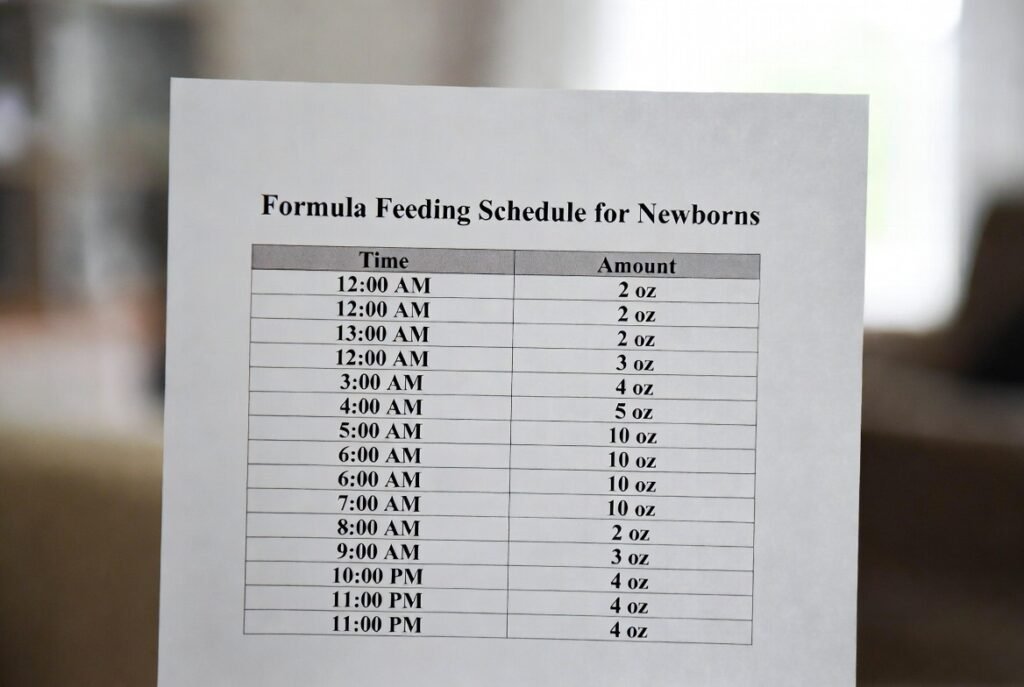 Formula feeding is a safe and healthy alternative when breastfeeding is not possible or when parents choose to combine feeding methods.
How Often to Formula Feed a Newborn
Formula-fed newborns typically feed every 3–4 hours. In the first few days, babies may take small amounts but gradually increase intake as their stomach grows.
General formula feeding guide:
- Day 1–3: 30–60 ml per feed
- Week 1–2: 60–90 ml per feed
- By 1 month: 90–120 ml per feed
Always follow your baby’s cues rather than forcing them to finish a bottle.
Combination Feeding: Breastfeeding and Formula
Some parents choose combination feeding, which includes both breast milk and formula. This can be helpful if milk supply is low or when flexibility is needed.
When combining feeds:
- Try to breastfeed first to maintain milk supply
- Use formula as a supplement when needed
- Maintain hygiene and proper bottle preparation
Consult a pediatrician or lactation consultant to create a balanced combination feeding schedule.
Signs Your Newborn Is Feeding Well
Knowing whether your baby is getting enough milk is a common concern. Signs of a well-fed newborn include:
- At least 6–8 wet diapers per day
- Regular bowel movements
- Steady weight gain
- Baby appears calm and satisfied after feeding
If your baby is excessively sleepy, fussy, or not gaining weight, seek medical advice.
Burping Your Newborn After Feeding
Burping is an essential part of newborn feeding care. Babies often swallow air during feeding, which can cause discomfort or spit-up.
Burp your baby:
- After every breastfeeding session
- After every 30–60 ml of formula
Hold your baby upright and gently pat or rub their back until they burp.
Night Feeding Schedule for Newborns
Newborns need night feeds for proper growth. It is normal for babies to wake every 2–3 hours at night in the first month. Avoid skipping feeds, especially for newborns under four weeks old.
Keep nighttime feeds calm and quiet by dimming lights and limiting stimulation. This helps your baby gradually understand the difference between day and night.
Common Feeding Mistakes to Avoid
- Forcing a baby to finish a feed
- Delaying feeds when hunger cues appear
- Overfeeding with formula
- Improper bottle sterilization
- Comparing feeding amounts with other babies
Every baby is unique, and feeding schedules may vary.
When to Consult a Doctor
Seek medical guidance if your newborn:
- Refuses feeds frequently
- Vomits excessively
- Has fewer wet diapers
- Shows signs of dehydration
- Is not gaining weight
Early support ensures healthy feeding habits and growth.
Final Thoughts on Newborn Feeding Schedule
A newborn feeding schedule is about responding to your baby’s needs rather than following a rigid routine. Whether you choose breastfeeding, formula feeding, or combination feeding, consistency, patience, and observation are key. Trust your instincts, follow hunger cues, and seek professional help when needed. With time, feeding will become easier and more predictable for both you and your baby.