
Screen Time Guidelines for Toddlers
Introduction
Screens are everywhere in modern life. From smartphones and tablets to televisions and laptops, digital devices have become part of daily routines. Many parents rely on screens to keep toddlers entertained while handling household chores or work. However, excessive screen exposure at a young age can affect a child’s development, sleep, and behavior.
Understanding screen time guidelines for toddlers helps parents create healthy digital habits early. Toddlers learn best through real-life experiences, human interaction, and physical play. While limited and high-quality screen content can be educational, unregulated usage may cause developmental concerns. This guide explains recommended screen time limits, potential risks, benefits of mindful media use, and practical strategies for managing screen exposure.
Creating a screen-time plan works best when the whole family follows it. Toddlers feel more secure when daily routines are predictable, so keeping screen use at the same time each day reduces resistance. Offering choices, such as selecting a favorite storybook or toy after turning off the device, helps toddlers transition without tears. Parents can also introduce a “screen reward system,” where digital time is earned after completing simple tasks like putting toys away or eating meals properly. This builds responsibility from an early age. It’s equally important to ensure toddlers do not eat meals while watching screens, as this can affect healthy eating habits. Instead, use mealtimes for conversation and bonding. Over time, these small practices create balanced digital behavior, supporting emotional growth, attention skills, and stronger parent-child relationships.
What Is Screen Time for Toddlers?
Screen time refers to any time spent using digital devices with screens. This includes:
- Watching cartoons on television
- Using smartphones or tablets
- Playing digital games
- Video calling family members
For toddlers, screen time should be carefully monitored because their brains develop rapidly during the first five years.
Recommended Screen Time Guidelines
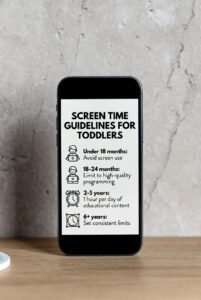
Health experts have established recommendations to help parents manage digital exposure.
For Toddlers Under 18 Months
Screen time should be avoided except for video chatting with family members.
For Toddlers 18–24 Months
If introduced, choose high-quality educational content and watch together.
For Children 2–5 Years
Limit screen time to one hour per day of supervised, high-quality programming.
These guidelines encourage real-world play, language development, and social interaction.
Why Limiting Screen Time Is Important
1. Supports Brain Development
Toddlers learn through sensory exploration. Real-life play stimulates brain connections more effectively than passive screen viewing.
2. Encourages Language Growth
Face-to-face communication builds vocabulary and emotional understanding. Excessive screen use can reduce verbal interaction opportunities.
3. Improves Sleep Quality
Blue light from screens interferes with melatonin production, making it harder for toddlers to fall asleep.
4. Reduces Behavioral Issues
Overuse of screens may lead to irritability, short attention spans, and tantrums.
5. Promotes Physical Activity
Limiting screen time encourages movement, improving motor development and physical health.
Positive Effects of Controlled Screen Use
Not all screen time is harmful. When used wisely, digital content can offer benefits.
- Educational apps teach numbers, colors, and shapes
- Story videos improve listening skills
- Video calls help maintain family connections
- Interactive games develop problem-solving abilities
The key is moderation and parental involvement.
Signs Your Toddler Is Getting Too Much Screen Time
Watch for these warning signs:
- Frequent tantrums when screen is removed
- Reduced interest in toys or outdoor play
- Difficulty falling asleep
- Limited eye contact
- Delayed speech development
If these appear, it may be time to reduce screen exposure.
Practical Tips to Manage Screen Time
1. Set Daily Limits
Use timers or parental control apps to track usage.
2. Create Screen-Free Zones
Keep bedrooms, dining areas, and playrooms screen-free.
3. Encourage Alternative Activities
Offer puzzles, drawing, music, and outdoor play.
4. Watch Together
Co-viewing helps toddlers understand content and feel connected.
5. Be a Role Model
Reduce your own screen usage during family time.
Creating a Healthy Media Routine
Consistency makes screen management easier.
- Schedule specific screen time slots
- Avoid screens before bedtime
- Reward real-world play instead of digital games
- Balance learning apps with physical activity
A predictable routine reduces resistance from toddlers.
Educational Screen Content: What to Choose
Select content that:
- Encourages interaction
- Uses simple language
- Promotes creativity
- Avoids fast-paced flashing visuals
Quality matters more than quantity.
Screen Time and Toddler Sleep
Avoid screens at least one hour before bedtime. Replace evening screen sessions with:
- Story reading
- Gentle music
- Quiet play
This supports better sleep patterns.
Handling Toddler Tantrums Over Screens
- Give warnings before turning off devices
- Offer alternative activities
- Stay consistent with rules
- Praise cooperative behavior
Consistency reduces power struggles.
Screen Time Alternatives for Toddlers
- Outdoor walks
- Sensory play
- Building blocks
- Singing songs
- Art activities
These activities boost creativity and motor skills.
Role of Parents in Digital Habits
Parents shape digital behavior. Setting boundaries early helps toddlers develop self-control and balanced habits later in life.
Frequently Asked Questions
Is video chatting safe for toddlers?
Yes, video calls with family support emotional bonding.
Are educational apps helpful?
Yes, when used in moderation and supervised.
Can too much screen time cause speech delay?
Excessive passive viewing may reduce communication opportunities.
Final Thoughts
Screen time is part of modern Parenting, but managing it wisely protects your toddler’s development. By setting limits, choosing quality content, and encouraging real-world interaction, parents can ensure screens support rather than hinder healthy growth.
The goal isn’t to eliminate screens entirely but to create a balanced, mindful media environment for your toddler.
Modern parenting requires balancing convenience with conscious choices. Screens can calm a restless toddler for a moment, but real-world experiences shape lasting learning. When parents set gentle boundaries, toddlers gradually understand healthy limits. Replacing screen moments with storytelling, outdoor exploration, or creative play keeps little minds active and curious. Offering consistent routines helps children transition smoothly away from digital devices without frustration. Praising good behavior when toddlers follow screen rules builds cooperation. Remember, toddlers imitate adults, so reducing your own screen use during family time creates a powerful example. With patience and consistency, families can create a healthy digital environment where technology supports learning without replacing human connection.